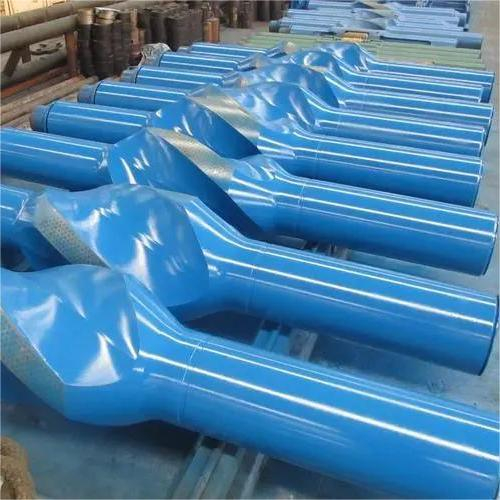
Did you know that even the most advanced drill bits can fail if the drill string lacks proper stabilization? Drilling stabilizers are unsung heroes in the drilling industry, operating behind the scenes to ensure smoother operations, reduce tool wear, and improve borehole quality. Without them, drilling becomes inefficient, expensive, and prone to failure.
In complex drilling environments—such as deepwater, shale, or high-deviation wells—wellbore stability and tool alignment are non-negotiable. This is where drilling stabilizers come in, playing a crucial role in maintaining directional control and prolonging equipment life.
In this post, you'll learn what a drilling stabilizer is, discover its various types, understand how placement affects performance, and explore how to choose the right stabilizer for your project. We'll cover technical details, design considerations, performance comparisons, and real-world applications—everything you need to know before making a purchase or operational decision.
Key Takeaway
A drilling stabilizer is a crucial component in the bottom hole assembly (BHA), used to stabilize the drill string and prevent unintentional deviation.
There are several types of stabilizers, including integral blade, welded blade, replaceable sleeve, replaceable blade, non-rotating, and roller reamer types.
Proper selection and placement of stabilizers significantly affect drilling efficiency, cost, and wellbore quality.
Design features such as blade geometry, hardfacing, and under-gauge options are critical in determining performance in specific formations.
This guide offers a comprehensive analysis of stabilizer types, selection strategies, and performance metrics.
Main Types of Drilling Stabilizer and Their Characteristics
Integral Blade Drilling Stabilizer
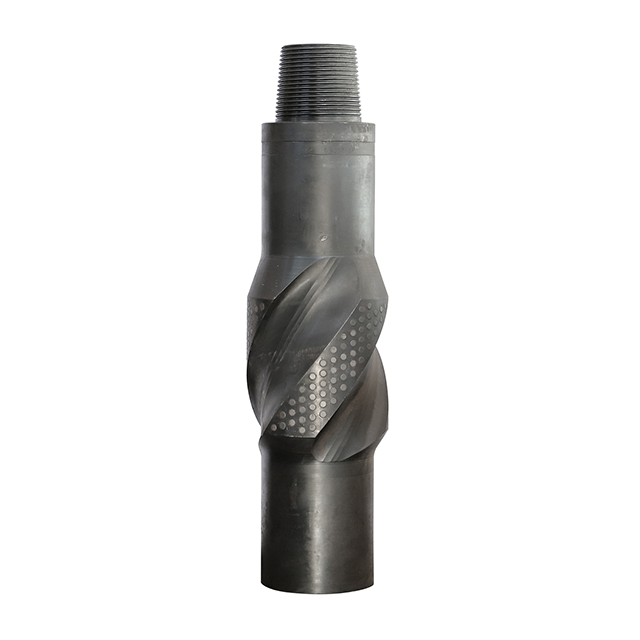
An integral blade drilling stabilizer is machined from a single piece of steel, making it extremely robust and suitable for high-load applications.
Characteristics:
High durability and resistance to fatigue
No welds or joints, reducing failure risks
Typically used in high-pressure, high-temperature (HPHT) environments
Applications: Deep wells, abrasive formations, offshore drilling
Welded Blade Drilling Stabilizer
In this type, blades are welded onto a solid body, offering a balance between cost and performance.
Characteristics:
Lower cost than integral models
Customizable blade geometry
More prone to blade detachment under extreme loads
Applications: Medium-depth drilling, directional wells
Replaceable Sleeve Drilling Stabilizer
These stabilizers feature a replaceable sleeve around the body, which can be changed out after wear—making them highly economical in the long term.
Characteristics:
Reduces downtime and cost
Ideal for soft to medium-hard formations
Allows for multiple re-runs with the same body
Applications: Land rigs, maintenance-focused operations
Replaceable Blade Drilling Stabilizer
Instead of replacing the sleeve, this design allows for blade replacement, which is useful when only the cutting elements are worn.
Characteristics:
Applications: Remote locations, operations with limited tool inventory
Non-Rotating Drilling Stabilizer
These stabilizers feature a sleeve that doesn't rotate with the drill string, reducing torque and drag, especially in deviated or horizontal wells.
Characteristics:
Applications: Directional and horizontal drilling operations
Roller Reamer as a Drilling Stabilizer
Though primarily a reaming tool, the roller reamer also serves as a stabilizer by keeping the bit centered and enlarging tight spots in the borehole.
Characteristics:
Combines reaming and stabilization
Reduces doglegs and borehole spiraling
Includes rolling cutters for smoother borehole walls
Applications: Hard formations, extended-reach wells
Drilling Stabilizer Placement and Design Considerations
Near-Bit Drilling Stabilizer
Placed just above the drill bit, the near-bit stabilizer ensures that the bit stays centered, reducing vibration and improving bit life.
Benefits:
Enhances directional control
Improves hole straightness
Reduces bit whirl and stick-slip
In-String Drilling Stabilizer
Placed further up the drill string, in-string stabilizers maintain borehole trajectory and reduce buckling in long drill strings.
Benefits:
Blade Design Options
Blade design significantly impacts performance. Common options include:
| Blade Type | Application | Pros | Cons |
| Straight Blades | Vertical wells | Simpler design, easy to manufacture | Less effective in deviated wells |
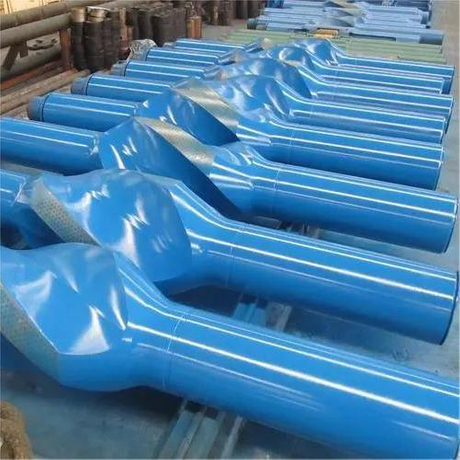
| Spiral Blades | Deviated or directional wells | Better borehole contact | Higher manufacturing cost |
| Chevron Blades | Soft formations | Gentle cutting action | Limited use in hard formations |
Blade width and angle also affect cuttings transport and hole cleaning efficiency.
Hardfacing Technology
Hardfacing involves applying wear-resistant materials to the blade surface, increasing tool longevity. Materials include:
Tungsten carbide: For hard formations
Diamond-enhanced materials: For extreme wear resistance
Nickel-based alloys: Corrosion-resistant
Under-Gauge Design
Under-gauge stabilizers are slightly smaller in diameter than the hole size, reducing torque and drag.
Use Cases:
How Drilling Stabilizer Improves Drilling Efficiency and Hole Quality
A properly selected and placed drilling stabilizer improves multiple aspects of the drilling process:
1. Minimizes Unintentional Deviation
By keeping the BHA centered, stabilizers prevent doglegs and spiraling, which can cause tool failure and increased drilling costs.
2. Reduces Tool and Bit Wear
With less vibration and bit bouncing, stabilizers extend the life of the drill bit and MWD tools.
3. Enhances Hole Cleaning
Spiral or chevron blades improve fluid circulation, helping remove cuttings more effectively.
4. Increases Rate of Penetration (ROP)
A stabilized assembly allows for higher WOB, improving ROP while keeping the borehole quality high.
Statistical Insight
| With Stabilizer | Without Stabilizer |
| 20–35% increase in ROP | Higher risk of deviation |
| 40% longer bit life | Increased tool failure |
| 30% reduction in NPT (non-productive time) | More reaming required |
Selection Criteria for a Drilling Stabilizer
When choosing a drilling stabilizer, consider the following factors:
1. Formation Type
2. Hole Size
Match the OD (outer diameter) of the stabilizer to the wellbore size. Undersized tools can cause vibration, while oversized tools increase drag.
3. Drilling Direction
4. Budget and Lifecycle Cost
Though integral stabilizers are expensive, they provide greater durability. Replaceable types offer a lower cost-per-run.
5. Tool Compatibility
Ensure that the stabilizer is compatible with the BHA design, especially with MWD/LWD tools and mud motors.
Conclusion
The drilling stabilizer is more than just a passive component—it's a performance enhancer, a cost reducer, and a key to borehole quality. By selecting the right type, blade design, and placement strategy, operators can significantly boost drilling efficiency, reduce non-productive time, and improve bit life.
As drilling environments become more complex, the role of stabilizers will only grow in importance. With new materials, smart sensors, and adaptive designs on the horizon, the future of drilling stabilization technology is promising and evolving.
FAQs
Q1: What is the lifespan of a drilling stabilizer?
A high-quality stabilizer can last for 500–1,000 drilling hours, depending on formation type and hardfacing.
Q2: Can I use more than one stabilizer in a BHA?
Yes, combining near-bit and in-string stabilizers enhances directional control and reduces vibration.
Q3: What's the difference between a stabilizer and a reamer?
A stabilizer centers the BHA, while a reamer enlarges or smoothens the borehole. Some tools, like roller reamers, perform both functions.
Q4: How do I know if my stabilizer is underperforming?
Excessive tool wear, poor hole quality, and erratic bit behavior can indicate stabilizer misplacement or failure.
Q5: How often should stabilizers be inspected?
Visual inspections should occur every run. NDT (non-destructive testing) is recommended every 300–500 hours.